Thursday, November 8, 2012

Red Town Lost by John Shupeck Jr.


Necro Publications continues its Fresh Flesh experiment with a debut novel from John Shupeck Jr. Here the author has woven four very different stories containing interlocking characters and situations. Like converging train lines ultimately intercepting at the same terminal, each story has the same analogous outcome. 

We begin in nowhere, Pennsylvania - and Dan Suppers is looking for civilization after breaking down in his car. Soon he stumbles upon the still-smoking and charred aftermath of a large fire, the remnants of an entire small town’s populace. With no survivors to tell the tale, Dan is left to piece together the mystery of Kecksgille’s final moments ... and how an entire municipality ended in a baptism of blood.

Incipientium:

Slow out of the gate, Incipientium chronicles a young Mike Rearick and his merry band of friends as they make their way to the local Kecksgille Baptist Church and a night of revelry. But the resultant climax here is more like a reverse-coin Children of the Corn that will see Kecksgille’s adults – guided by the hand of a local priest - rise up against the children in a well-choreographed genocide.

Hypochondriac:     

As implied by the title, mental illness takes centre stage in this first person narration. Composed in diary form, we are slowly introduced into the ailing world of young Carl Truitt and the doctors tasked with helping him. Our narrator’s voice is sly, crass, and contains just enough adolescent humour to please any underdog.

River Road:

Chronicles the story of Zachary Bennett who takes the path less traveled in an effort to escape an impoverished existence and parents battling addiction. A mere child when he begins his journey, Zachary Bennett comes to age almost overnight after being pitted against the ‘medicine man’ of his nightmares. A final showdown in heart of Kecksgille rounds off a story rooted in subtext.

Spider Arms:

Another tale of the underdog, Spider Arms centers on Kevin Ritchie, Kecksgille’s neighborhood teenage punching bag for Jocks everywhere. Cursed with a subtle malady that redefines lanky, Kevin decides – on one fateful day – to fight back. But not in the manner his adversaries expect. Ultimately a routine narrative of revenge.

There are a few other intervals here in Red Town Lost – some clever, others mystifying – while the syntax (at times) can be awkward and comes pre-packaged with run-off sentences and juvenile metaphysics. However, as a working whole there is a quality of strangeness that grows as the story progresses. If some of the plot devices are a little too deus ex machina for some readers, I suspect more light can be shed on them in John’s illuminating and candid afterward.

Red Town Lost is available now from Necro Publications.


Monday, October 15, 2012

A Gentle Hell by Autumn Christian


Another slice of stories as part of Dark Continents Tales of Darkness and Dismay series, A Gentle Hell by Autumn Christian showcases a distinctive cluster of four tales – brimming at the edge with what could be termed ‘surrealist’ fiction but devoid of absurdity. Often hard to nail down but somehow more potent for it, this is a body of work very similar to my previous review ... where the story is – at the discretion of the reader – always open to interpretation. The ultimate payoff here is keen insights from the author and elegiac prose.

An almost dystopian alternate reality is the scene for They Promised Dreamless Sleep. Here our narrator reports living in a realm where families consensually hook up to ‘machines’ and are placated in severe and disturbing ways. Shades of 1984 with a domestic twist.

In Your Demiurge is Dead we step into Neil Gaiman territory with the death of a God and the birth of another. Jehovah has washed up – dead – on the Gulf of Mexico. Heralding a new era for humanity is the Triple Goddess. Another domestic setting is instigated with a police investigation into deaths in a large family. Through quirky characters and idealistic insights, we are granted a story that is at once confounding yet absorbing. 

With the The Dog That Bit Her, Autumn delivers what is probably the most unique Werewolf tale you’ll ever encounter. It’s a story about psychological addictions and slavish trust – all given credence by a storyteller who witnesses his wife’s slow decent into what could be termed, unquestionably, a gentle hell.

It is the last tale, however, that is probably the hardest to grant revelation. In The Singing Grass, I imagine artists everywhere will be granted something within the prose to identify with as a writer tries to find her muse. Heavy on metaphor, and (in the end) gore, it somehow serves as symmetry and complements what has come before.

For many, this will be a difficult journey. The often rudimentary formula of ‘story’ has been abolished in favor of flights of fancy that are allegorical or dream like in nature. It is often claimed for horror that it draws on our primitive responses but, as in key moments of this collection, the best stories can owe their power to something closer to the modern surface.


Saturday, October 6, 2012

Valentines for the Dead by Corrine De Winter


The winner of a Bram Stoker award for poetry a few years back, Corrine De Winter is a name that has – up until now – escaped me. Following a quick perusal of past achievements we find a lyrical writer held in high regard by the collective tribe. In between reading some of the more commercial fare over the course of a year, I like to seek out those elusive gems: fiction not sliding easily into any well defined category. Valentines for the Dead - for all its intangible qualities - is an innovative collection that more than satisfies this requirement.

And make no mistake: this is indeed the territory of a poet. From the opening story Halo a reader is granted prose that shies away from the nuts and bolts of story, favoring instead a lyrical syntax told primarily in first person. Although the horror can be difficult to find at times, Corrine keeps it waiting in the wings – a small turn of phrase giving way to an unexpected twist where all that has come before can be questioned. Whether it’s a child who grows up in a house of thaumaturgy and eventually learns to fly (or a jealous sibling who dabbles in fratricide for eternal love), Corrine has a powerful command of language with just enough obscure story to perhaps warrant a second reading. If I could level a certain criticism, it would be that each first person tale contains a similar voice; with the run-off sometimes confusing. It was challenging, at times, to ascertain where old territory ended and new characters began.

A few personal standouts would include Youth is Wasted – a modern Frankenstein riff where a child pays the ultimate price for an elderly man’s broken heart. Watercolor is delightfully malign; a domestic Village of Damned that, in due course, brings forth new life from death. But taking out the top prize here would have to be Dead Boys – an original blend of fact and fiction centered on the subject of premature death in rock n’ roll's realm ... and the individuals who deal with our flesh after expiration.

A short story collection that is mythic, thought provoking (and with just the right twist of gothic), Valentines for the Dead is an accomplished fictional début from a unique talent.


Monday, October 1, 2012

ROPE by Martin Livings


When Stephen King first published The Green Mile in serial format back in 96, the story was my first large-scale exposure to death row in a fictional setting. Not just death row, but in particular the electric chair. Although I don’t know for sure, I’m betting there are reams of genre fiction encompassing this particular milieu: everything from stark legal thrillers in the mold of John Grisham, to frightening serial killer fodder, the tortuous playground of writers such as Thomas Harris and James Patterson. However it was King’s magical yet realist tale (for me, anyway) that finally pushed capital punishment screaming into a kind of cultural awareness. Upon finishing the book, I’m sure I’m not the only reader whose curiosity was suddenly piqued by the taboo of execution – not only the myriad methods involved, but also the untold stories of those behind the curtain: the men and women charged with dispensing unfeeling and clinical justice to the condemned.

Martin Livings has, no doubt, had similar thoughts.

Our tale is begun at the turn of last century, with Australia’s Fremantle prison struggling to pull itself out of a national convict past. A nameless narrator shares with us the humble beginnings of being a sanctioned serial killer: that of the hangman. An apprentice from a young age, he is given the responsibility of fashioning his own noose, a rite of passage, that will see him embrace his calling and ultimately being defined by it.

Life itself is a rope with a noose at each end, just like mine.

A short excursion, Martin manages to cram a lot of character study into a small space, and it’s personally how I like my paragraphs: weighty with exposition and lean on dialogue. In some ways Rope is partly reminiscent of The Green Mile, whereby story is ultimately foreshadowed by sin that leads to a different kind of redemption.

Martin Livings has been traversing Australia’s dark fiction scene for over two decades, providing dependable tales with a mature rendering of prose. Although brief, Rope still manages to deliver something that is unmistakably the author's.


Saturday, September 22, 2012

Edge by Koji Suzuki


A name now synonymous with dark fiction, Koji Suzuki rose to prominence as the original author of the Ring Cycle books, a sub-set of accomplished outings sparking off not only English translations, but a veritable trove of manga and movie adaptations giving rise to a kind of renaissance in Japanese horror fiction and cinema. Quick to catch fire overseas, this new-found genus soon found an audience across the Pacific with American director Gore Verbinski re-making the original Ringu for English audiences ... an interpretation that to this day remains all enduring with its tone and tension-wrought climax.  

It’s an impressive resume, but right off the bat I’m going to inform reader's EDGE is my first introduction to the authors prose – and partly why I decided to take on the book for appraisal. Here, Koji shifts gears in a largely new direction from what we have come to know in his thematic world of J-Horror: poltergeists given a wide birth in favour of terrors more existential in nature ... the fear of nature itself. In the past few decades, science (and in particular fields of study such as quantum mechanics), have offered us a glimpse of an unseen world lying just under the surface of our perceived senses. Through a universal language like mathematics, we are discovering this realm is not only more mysterious and complex than we ever imagined, it is ultimately spiritual in nature ... with consciousness itself playing a vast role capable of influencing the material world.

After the mysterious disappearance of her father in 1994, freelance reporter Saeko Kuriyama feels divorced from life. When unexplained phenomenon begin to take hold of Japan – namely individuals and families vanishing into thin air overnight – Saeko feels drawn to the mystery as though it could be her personal calling. Reminiscent of disappearances such as the ghost ship Mary Celeste in 1872, the vanishings begin to spread over the entire continent in what soon becomes a discernible pattern involving fault-lines. When drafted by a magazine editor to explore the vanishing of one Fujimura family, Saeko teams up with a local TV station and a psychic to investigate the case. Together they slowly peel back the layers of a genuine unknown to find something far more sinister than a motley crew of missing persons: an anomaly rooted in natural causes – a profound disturbance in being itself.  

For a novel originally composed in another language entirely, the translation here comes off clean. With only one typo apparent, Koji’s syntax is free-flowing and smooth. There are some metaphors just beg to be read out loud, and the overall structure of the writing is intelligent and heart-felt. I suppose one criticism I could level would be the distinct lack of action; there are a lot of scenes where characters (and in particular Seako) spend numerous passages merely ruminating about underlying philosophies, coming to final conclusions only guessed at but then given veracity merely by deduction. However, when dealing with the subject matter (that of quantum horror) it seems Koji has purposefully taken this path. EDGE, for all its wonky science, is a moody journey. When delving into the climax, a reader can almost hear a cinematic soundtrack at the heart of the story ... a sensation not unlike experiencing some of the finer aspects of Gore Verbinski’s The Ring.    

An ambitious novel to take on, I can see there will be a few disgruntled readers with the topic at hand, and the blurb attached to various websites and the novel itself is overly misleading with how the story pans out. Personally, however, the focus here is a theme I’ve always held a fascination for: ancient civilizations and the advanced world they left behind. Our known recorded history – the one that we were collectively taught – seems inherently flawed with new evidence coming to light seeming to raise more questions than answers. Through astute personal observations and modern physics, Koji tries to find the answer to those mysteries, and ultimately delivers a unique reading experience reflective of the current cultural climate.     


Saturday, August 25, 2012

Vaudeville by Greg Chapman


2012 has been a fruitful year for Australia’s Greg Chapman. After cementing himself as a kind of polymath writer and artist in the wake of his successful graphic novel collaboration Witch Hunts, Dark Prints Press has seen fit to publish Mr. Chapman’s Vaudeville as part of their new novella series – latching onto an already bourgeoning eBook market and giving new voice to a this timely and passionate author.

After the suicide of his father Dominic one year previous, young Anthony Moore returns to the mysterious woods on the outskirts of his home town Keaton where the baffling act took place – for closure, for revelation – for the off-chance that perhaps the forest will yield its secrets to the grieving family left behind. A doting father and a loyal husband to Anthony’s mother, Dominic’s decision on that fateful day left a wake of repercussions that not only scarred a family but left an entire town disconsolate. Keaton Woods, home to a history violence, does more than reveal its secrets to Anthony ... it exposes the malevolent spirits who dwell within the trees – a travelling troupe of performers caught between Hell itself and dying to give Anthony just one last performance.

Perhaps one the shortfalls of Greg’s first novella Torment was a subtle lack of metaphor within the composition – but here the author (much to my delight) piles it on thick. We can see the writer’s confidence emerging to create images that are vivid, asides that are incisive, and prose that is elegant. The greatest hook with Vaudeville is probably its cavalcade feel – that sense of carnival tied with innocence whose roots are to be found in tales like Bradbury’s Something Wicked This Way Comes. The caravan of ghosts (whose names I will not reveal), are entertaining and wily – providing just enough sense of mischief and malevolence to keep them scary. What we have in the end is almost a coming-of-age tale that leads to a conjuring of Black verses the White – embodying the theme of an ancient evil who feeds on the souls of the living to survive.    


Wednesday, August 15, 2012

Working Stiffs by Lucy Leitner


This is the fourth book in a series called Fresh Flesh from Necro Publications. For a reading experiment I began all the titles at once ... and the tale holding my attention for the longest duration would be the one to receive the first appraisal. Lucy Leitner’s Working Stiffs, a comedic take on the zombie sub-genre, stood out among the rest.

One thing neeing to be said: the cover illustration doesn’t quite do Lucy’s work justice. Make no mistake, this is an adult novel. The comedic elements are pertinent – but it still manages to do the same thing George Romeo attempted when he directed his first film: hold up a dark mirror to our society with socially relevant commentary.  

Pittsburgh, and the zombie uprising has come to giant corporate entity Pro-Well Pharmaceuticals. Led by the charismatic ex-meth dealer Marshall Owens, Pro-Well has taken the dregs of society off the streets to amass assembly line workers that will not question authority and work with the efficiency of mindless automatons. But soon the plan backfires when the injected serum becomes an unstoppable virus rendering the employees with an appetite for human flesh. Pitted against the horde are an eccentric group of misfits and mavericks: higher echelon employees who will now consider the normal drudgery of a nine-to-five work day the pinnacle of paradise.  

Working Stiffs is not the kind of work I would usually seek out – and depending on who you talk to the zombie sub-genre is now becoming a somewhat jaded niche market in danger of becoming over-saturated. But I found the lack of familiarity here to refreshing. Not being an expert on the rules I could casually slip into the story without playing jury or arbitrator to a dark fiction work seething with clever observations and biting sarcasm. The diverse characters here are the crowning achievement, and it was easy to envision each reader who takes the journey finding someone to identify with. There’s Hank, the jaded misanthropic queer who’s addicted to the call of happy hour, an enigma that ‘no one really understood but everybody knew not to fuck with.' There's Janice the anointed Goth who joins Pro-Well to ensure enough job security to save up for her burial plans. In the mix is also a football-obsessed janitor who forges lifelong bonds with local icons he has never met - and an ex-army General who slowly leads the ranks of the dead into an epic showdown with the scarred CEO who started the whole mess ... a chief executive who still dreams of a future enforcing thousands of hobos to work under slave conditions in order to make male pattern baldness a thing of the past.  

Relevant and sharp, Lucy Leitner has concocted a humorous but above all engaging allegory of working life – a pleasing romp with enough extravagant metaphors to keep any zombie aficionado entertained. With three books in the Fresh Flesh series to come, I look forward to more high calibre outings from Necro Publications.

Thursday, July 19, 2012

Shadows of The Past by Richard Schiver


There is an unquestionable pattern to my reading habits, whereby I usually alternate between the prolific and the up-and-coming – giving awareness to new voices whose novel descriptions act as catalyst to take a novel-length journey. This, the debut novel from Richard Schivar, will pique a reader’s curiosity just enough: here we are presented with Lovecraftian overtones evocative (perhaps) of something fashioned from the early pen - or pseudonyms
- of Dean Koontz.

Jaded police detective Sam Hardin is trying to pick up the pieces of his life after the untimely death of wife Anna. Now a single father to a teenage girl and a brain damaged four year old boy, he finds more succor in the bottle and immersing himself in police work than attending to family. When a series of bizarre murders at an abandoned warehouse lead to the uncovering of an ancient ceremonial dagger, Jack is suddenly thrust into the realm of an ancient God who not only inhabits human form, but has personally marked his son for possession, thus beginning a new reign of terror and termination of the human species. 

A novel that begins with promise, Shadows of the Past quickly dovetails into a confusing mish-mash of clichéd characters and uneven scenes that are never fully realized or resolved. Sam Hardin is a rogue cop with a giant chip on his shoulder. His depression, regret, and perpetual lamenting apropos of past decisions slowly begin to grate on the reader, shedding light on a protagonist who isn’t exactly likable and sometimes hard to believe. His nemesis in this madness, Jack Griffith, stumbles upon the ancient blade while working the storm-drains ... and it is here things become more perplexing, culminating in Stephen King’s Pennywise making an entirely unwelcome cameo. Richard goes on to use the description ‘fathomless black eyes’ roughly two dozen times over the course of two hundred pages. The final showdown, an epic stand-off between Sam Hardin and Jack Griffith in the snow, has the distinct flavor of formula – a prescription for pulp (horror) fiction throughout the eighties and early nineties.

Though puzzling at times, there were enough adequate and redeemable moments in the novel to show a writer in the early stages of ambition. Schivar has a flare for prose and – although hardwired to repeat the same word two (sometimes three) times in a sentence – occasional flashes of skill. Someone who (with time) will eventually find the rhythms of structure over the extended length of a novel.  


Friday, July 13, 2012

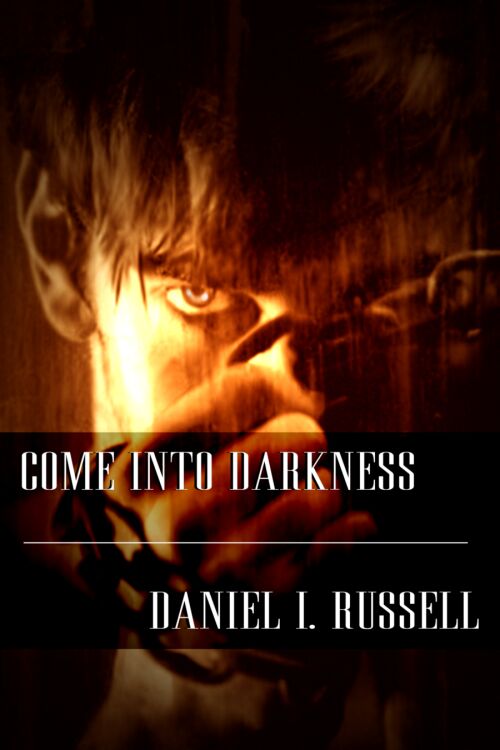
Come Into Darkness by Daniel I Russell


Since the publication of his debut novel in late 2010, Western Australian author Daniel I Russell has continuously moved forward to create a paradigm of horror fiction stamped with great gifts of invention. In what is perhaps his most prolific year yet, 2012 has given rise to both Critique and The Collector, respectively. Here we have a dark fiction author that is not afraid to push boundaries, does not shy away from the visceral, and is still developing a voice that becomes more unique with each successive tale.

Mario Fulcinni has seen it all. After years working in the adult film industry he’s ready to try out new pleasures belonging to a different school of thought – something to dull the pain of a lifetime of fruitless pursuits and unsatisfying addictions. At the urging of an agent he attends Metus House, a mysterious mansion promising the tour of a life time. The house’s mystery only adds fuel to the pyre, and soon Mario is swept up by an aging debonair escort (Worth) who shows Mario a realm where horror, terror, and fantasy are used to define fundamental human states.

A story of novella length, Come Into Darkness is still crammed full of everything we’ve come to expect from the author. Light on prose, heavy on dialogue, this is biting narrative simplicity and easy to digest. Room by room, Mario is exposed to a past, present, and future like a Faustian pact with the Devil. Through a trail of suffering, Mario and a fellow traveler will witness their sins come to life.

While not as ambitious as Critique, this story is still layered with enough subtext to form an undeniable method to the madness. For those averse to extreme horror (such as the imagery presented in the SAW franchise), there will be more than one scene to evoke feelings of horror – perhaps even loathing. Yet we still find elements of sophistication here, and enough emotional import to gently remind us of an old truism so pertinent in horror fiction ... that Hell itself is repetition. 


Friday, July 6, 2012

Witch Hunts: A Graphic History of the Burning Times


Having a passing acquaintance with a creator behind Witch Hunts, I was well aware of this graphic novel's conception and genesis some time ago. The long road to publication saw a mutual desire by all three participants to bring something unique to table: an original slant detailing a part of history now mired in myth but no less potent: the Witch Hunts and Burning Times of the middle ages ... a collective mass-hysteria that encompassed every shade and continent of the known world at the time.

We begin our journey with an overview, and see how – with just a few short stanzas of the Bible – the world of men and organized faith perverted religion, ushering in a whole new world of macabre justice almost unfathomable in the details. From the humble beginnings of rural towns in Europe (with local populaces at a perpetual loss to explain negative weather patterns, illness and death), they sought a scapegoat in the name of witchcraft and sexual liaison with Satan. The reality, of course, was such parlays were so rare as to be non-existent – and the only way to extract confessions and play out blood-lust was to implement obscene torture. This physical agony included everything from ‘trial by water’ to medieval devices that crushed legs, extracted fingernails, and choked an unwitting victim to the point they would invariably declare guilt. Once the philosophy was set in motion (proliferated by such witch-hunting bibles as the Malleus Maleficarum), no one was immune to the outbreak, ensuring that brother would rise up against brother, and the methods of execution became even more elaborate.

The biggest attribute of Witch Hunts probably comes in the form of its education. Even if you have an intimate knowledge of the burning times (in particular events like the Salem Witch Trials) there is still bound to be a nugget of information within these pages that will come as a surprise. Moreover, the book is philosophical at heart, and you will be asking yourself pertinent questions. Such as: is it possible an intelligent species has to go through such a brutal and arcane process to achieve eventual enlightenment? And how, exactly, does a book that millions preach contain a benign moral code undertake such a perverse reversal? The revelations contained within will entice you to seek out your own disclosure: within lie a plethora of names, dates, and situations just begging further research. 

Whether you are a graphic novel fan, a horror aficionado, or even a scholar of history, Witch Hunts is a must-have compendium of art – a project the illustrator, Greg Chapman, seemed born to. With these black and white illustrations, we find a level of sophistication previously unseen. And in a digital age of electronic prose and art, Witch Hunts is the perfect physical purchase to compliment a library. Glossy, defined, and above all educational, all three authors have outdone themselves recreating a dark epoch of human history.