Monday, October 1, 2012

ROPE by Martin Livings


When Stephen King first published The Green Mile in serial format back in 96, the story was my first large-scale exposure to death row in a fictional setting. Not just death row, but in particular the electric chair. Although I don’t know for sure, I’m betting there are reams of genre fiction encompassing this particular milieu: everything from stark legal thrillers in the mold of John Grisham, to frightening serial killer fodder, the tortuous playground of writers such as Thomas Harris and James Patterson. However it was King’s magical yet realist tale (for me, anyway) that finally pushed capital punishment screaming into a kind of cultural awareness. Upon finishing the book, I’m sure I’m not the only reader whose curiosity was suddenly piqued by the taboo of execution – not only the myriad methods involved, but also the untold stories of those behind the curtain: the men and women charged with dispensing unfeeling and clinical justice to the condemned.

Martin Livings has, no doubt, had similar thoughts.

Our tale is begun at the turn of last century, with Australia’s Fremantle prison struggling to pull itself out of a national convict past. A nameless narrator shares with us the humble beginnings of being a sanctioned serial killer: that of the hangman. An apprentice from a young age, he is given the responsibility of fashioning his own noose, a rite of passage, that will see him embrace his calling and ultimately being defined by it.

Life itself is a rope with a noose at each end, just like mine.

A short excursion, Martin manages to cram a lot of character study into a small space, and it’s personally how I like my paragraphs: weighty with exposition and lean on dialogue. In some ways Rope is partly reminiscent of The Green Mile, whereby story is ultimately foreshadowed by sin that leads to a different kind of redemption.

Martin Livings has been traversing Australia’s dark fiction scene for over two decades, providing dependable tales with a mature rendering of prose. Although brief, Rope still manages to deliver something that is unmistakably the author's.


Saturday, September 22, 2012

Edge by Koji Suzuki


A name now synonymous with dark fiction, Koji Suzuki rose to prominence as the original author of the Ring Cycle books, a sub-set of accomplished outings sparking off not only English translations, but a veritable trove of manga and movie adaptations giving rise to a kind of renaissance in Japanese horror fiction and cinema. Quick to catch fire overseas, this new-found genus soon found an audience across the Pacific with American director Gore Verbinski re-making the original Ringu for English audiences ... an interpretation that to this day remains all enduring with its tone and tension-wrought climax.  

It’s an impressive resume, but right off the bat I’m going to inform reader's EDGE is my first introduction to the authors prose – and partly why I decided to take on the book for appraisal. Here, Koji shifts gears in a largely new direction from what we have come to know in his thematic world of J-Horror: poltergeists given a wide birth in favour of terrors more existential in nature ... the fear of nature itself. In the past few decades, science (and in particular fields of study such as quantum mechanics), have offered us a glimpse of an unseen world lying just under the surface of our perceived senses. Through a universal language like mathematics, we are discovering this realm is not only more mysterious and complex than we ever imagined, it is ultimately spiritual in nature ... with consciousness itself playing a vast role capable of influencing the material world.

After the mysterious disappearance of her father in 1994, freelance reporter Saeko Kuriyama feels divorced from life. When unexplained phenomenon begin to take hold of Japan – namely individuals and families vanishing into thin air overnight – Saeko feels drawn to the mystery as though it could be her personal calling. Reminiscent of disappearances such as the ghost ship Mary Celeste in 1872, the vanishings begin to spread over the entire continent in what soon becomes a discernible pattern involving fault-lines. When drafted by a magazine editor to explore the vanishing of one Fujimura family, Saeko teams up with a local TV station and a psychic to investigate the case. Together they slowly peel back the layers of a genuine unknown to find something far more sinister than a motley crew of missing persons: an anomaly rooted in natural causes – a profound disturbance in being itself.  

For a novel originally composed in another language entirely, the translation here comes off clean. With only one typo apparent, Koji’s syntax is free-flowing and smooth. There are some metaphors just beg to be read out loud, and the overall structure of the writing is intelligent and heart-felt. I suppose one criticism I could level would be the distinct lack of action; there are a lot of scenes where characters (and in particular Seako) spend numerous passages merely ruminating about underlying philosophies, coming to final conclusions only guessed at but then given veracity merely by deduction. However, when dealing with the subject matter (that of quantum horror) it seems Koji has purposefully taken this path. EDGE, for all its wonky science, is a moody journey. When delving into the climax, a reader can almost hear a cinematic soundtrack at the heart of the story ... a sensation not unlike experiencing some of the finer aspects of Gore Verbinski’s The Ring.    

An ambitious novel to take on, I can see there will be a few disgruntled readers with the topic at hand, and the blurb attached to various websites and the novel itself is overly misleading with how the story pans out. Personally, however, the focus here is a theme I’ve always held a fascination for: ancient civilizations and the advanced world they left behind. Our known recorded history – the one that we were collectively taught – seems inherently flawed with new evidence coming to light seeming to raise more questions than answers. Through astute personal observations and modern physics, Koji tries to find the answer to those mysteries, and ultimately delivers a unique reading experience reflective of the current cultural climate.     


Saturday, August 25, 2012

Vaudeville by Greg Chapman


2012 has been a fruitful year for Australia’s Greg Chapman. After cementing himself as a kind of polymath writer and artist in the wake of his successful graphic novel collaboration Witch Hunts, Dark Prints Press has seen fit to publish Mr. Chapman’s Vaudeville as part of their new novella series – latching onto an already bourgeoning eBook market and giving new voice to a this timely and passionate author.

After the suicide of his father Dominic one year previous, young Anthony Moore returns to the mysterious woods on the outskirts of his home town Keaton where the baffling act took place – for closure, for revelation – for the off-chance that perhaps the forest will yield its secrets to the grieving family left behind. A doting father and a loyal husband to Anthony’s mother, Dominic’s decision on that fateful day left a wake of repercussions that not only scarred a family but left an entire town disconsolate. Keaton Woods, home to a history violence, does more than reveal its secrets to Anthony ... it exposes the malevolent spirits who dwell within the trees – a travelling troupe of performers caught between Hell itself and dying to give Anthony just one last performance.

Perhaps one the shortfalls of Greg’s first novella Torment was a subtle lack of metaphor within the composition – but here the author (much to my delight) piles it on thick. We can see the writer’s confidence emerging to create images that are vivid, asides that are incisive, and prose that is elegant. The greatest hook with Vaudeville is probably its cavalcade feel – that sense of carnival tied with innocence whose roots are to be found in tales like Bradbury’s Something Wicked This Way Comes. The caravan of ghosts (whose names I will not reveal), are entertaining and wily – providing just enough sense of mischief and malevolence to keep them scary. What we have in the end is almost a coming-of-age tale that leads to a conjuring of Black verses the White – embodying the theme of an ancient evil who feeds on the souls of the living to survive.    


Wednesday, August 15, 2012

Working Stiffs by Lucy Leitner


This is the fourth book in a series called Fresh Flesh from Necro Publications. For a reading experiment I began all the titles at once ... and the tale holding my attention for the longest duration would be the one to receive the first appraisal. Lucy Leitner’s Working Stiffs, a comedic take on the zombie sub-genre, stood out among the rest.

One thing neeing to be said: the cover illustration doesn’t quite do Lucy’s work justice. Make no mistake, this is an adult novel. The comedic elements are pertinent – but it still manages to do the same thing George Romeo attempted when he directed his first film: hold up a dark mirror to our society with socially relevant commentary.  

Pittsburgh, and the zombie uprising has come to giant corporate entity Pro-Well Pharmaceuticals. Led by the charismatic ex-meth dealer Marshall Owens, Pro-Well has taken the dregs of society off the streets to amass assembly line workers that will not question authority and work with the efficiency of mindless automatons. But soon the plan backfires when the injected serum becomes an unstoppable virus rendering the employees with an appetite for human flesh. Pitted against the horde are an eccentric group of misfits and mavericks: higher echelon employees who will now consider the normal drudgery of a nine-to-five work day the pinnacle of paradise.  

Working Stiffs is not the kind of work I would usually seek out – and depending on who you talk to the zombie sub-genre is now becoming a somewhat jaded niche market in danger of becoming over-saturated. But I found the lack of familiarity here to refreshing. Not being an expert on the rules I could casually slip into the story without playing jury or arbitrator to a dark fiction work seething with clever observations and biting sarcasm. The diverse characters here are the crowning achievement, and it was easy to envision each reader who takes the journey finding someone to identify with. There’s Hank, the jaded misanthropic queer who’s addicted to the call of happy hour, an enigma that ‘no one really understood but everybody knew not to fuck with.' There's Janice the anointed Goth who joins Pro-Well to ensure enough job security to save up for her burial plans. In the mix is also a football-obsessed janitor who forges lifelong bonds with local icons he has never met - and an ex-army General who slowly leads the ranks of the dead into an epic showdown with the scarred CEO who started the whole mess ... a chief executive who still dreams of a future enforcing thousands of hobos to work under slave conditions in order to make male pattern baldness a thing of the past.  

Relevant and sharp, Lucy Leitner has concocted a humorous but above all engaging allegory of working life – a pleasing romp with enough extravagant metaphors to keep any zombie aficionado entertained. With three books in the Fresh Flesh series to come, I look forward to more high calibre outings from Necro Publications.

Thursday, July 19, 2012

Shadows of The Past by Richard Schiver


There is an unquestionable pattern to my reading habits, whereby I usually alternate between the prolific and the up-and-coming – giving awareness to new voices whose novel descriptions act as catalyst to take a novel-length journey. This, the debut novel from Richard Schivar, will pique a reader’s curiosity just enough: here we are presented with Lovecraftian overtones evocative (perhaps) of something fashioned from the early pen - or pseudonyms
- of Dean Koontz.

Jaded police detective Sam Hardin is trying to pick up the pieces of his life after the untimely death of wife Anna. Now a single father to a teenage girl and a brain damaged four year old boy, he finds more succor in the bottle and immersing himself in police work than attending to family. When a series of bizarre murders at an abandoned warehouse lead to the uncovering of an ancient ceremonial dagger, Jack is suddenly thrust into the realm of an ancient God who not only inhabits human form, but has personally marked his son for possession, thus beginning a new reign of terror and termination of the human species. 

A novel that begins with promise, Shadows of the Past quickly dovetails into a confusing mish-mash of clichéd characters and uneven scenes that are never fully realized or resolved. Sam Hardin is a rogue cop with a giant chip on his shoulder. His depression, regret, and perpetual lamenting apropos of past decisions slowly begin to grate on the reader, shedding light on a protagonist who isn’t exactly likable and sometimes hard to believe. His nemesis in this madness, Jack Griffith, stumbles upon the ancient blade while working the storm-drains ... and it is here things become more perplexing, culminating in Stephen King’s Pennywise making an entirely unwelcome cameo. Richard goes on to use the description ‘fathomless black eyes’ roughly two dozen times over the course of two hundred pages. The final showdown, an epic stand-off between Sam Hardin and Jack Griffith in the snow, has the distinct flavor of formula – a prescription for pulp (horror) fiction throughout the eighties and early nineties.

Though puzzling at times, there were enough adequate and redeemable moments in the novel to show a writer in the early stages of ambition. Schivar has a flare for prose and – although hardwired to repeat the same word two (sometimes three) times in a sentence – occasional flashes of skill. Someone who (with time) will eventually find the rhythms of structure over the extended length of a novel.  


Friday, July 13, 2012

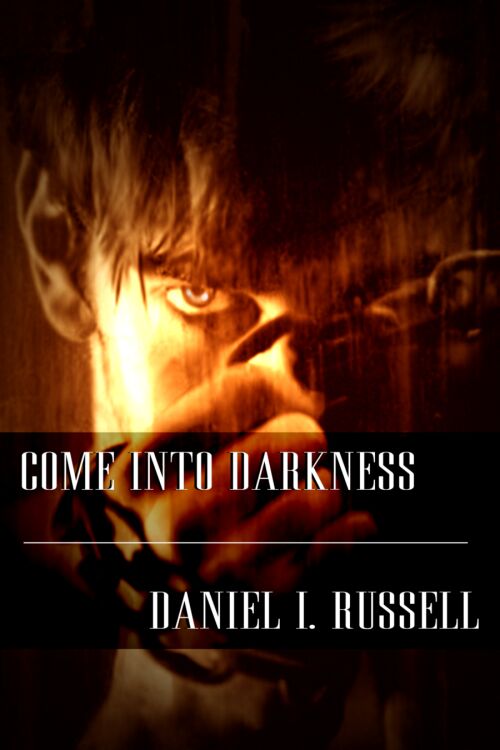
Come Into Darkness by Daniel I Russell


Since the publication of his debut novel in late 2010, Western Australian author Daniel I Russell has continuously moved forward to create a paradigm of horror fiction stamped with great gifts of invention. In what is perhaps his most prolific year yet, 2012 has given rise to both Critique and The Collector, respectively. Here we have a dark fiction author that is not afraid to push boundaries, does not shy away from the visceral, and is still developing a voice that becomes more unique with each successive tale.

Mario Fulcinni has seen it all. After years working in the adult film industry he’s ready to try out new pleasures belonging to a different school of thought – something to dull the pain of a lifetime of fruitless pursuits and unsatisfying addictions. At the urging of an agent he attends Metus House, a mysterious mansion promising the tour of a life time. The house’s mystery only adds fuel to the pyre, and soon Mario is swept up by an aging debonair escort (Worth) who shows Mario a realm where horror, terror, and fantasy are used to define fundamental human states.

A story of novella length, Come Into Darkness is still crammed full of everything we’ve come to expect from the author. Light on prose, heavy on dialogue, this is biting narrative simplicity and easy to digest. Room by room, Mario is exposed to a past, present, and future like a Faustian pact with the Devil. Through a trail of suffering, Mario and a fellow traveler will witness their sins come to life.

While not as ambitious as Critique, this story is still layered with enough subtext to form an undeniable method to the madness. For those averse to extreme horror (such as the imagery presented in the SAW franchise), there will be more than one scene to evoke feelings of horror – perhaps even loathing. Yet we still find elements of sophistication here, and enough emotional import to gently remind us of an old truism so pertinent in horror fiction ... that Hell itself is repetition. 


Friday, July 6, 2012

Witch Hunts: A Graphic History of the Burning Times


Having a passing acquaintance with a creator behind Witch Hunts, I was well aware of this graphic novel's conception and genesis some time ago. The long road to publication saw a mutual desire by all three participants to bring something unique to table: an original slant detailing a part of history now mired in myth but no less potent: the Witch Hunts and Burning Times of the middle ages ... a collective mass-hysteria that encompassed every shade and continent of the known world at the time.

We begin our journey with an overview, and see how – with just a few short stanzas of the Bible – the world of men and organized faith perverted religion, ushering in a whole new world of macabre justice almost unfathomable in the details. From the humble beginnings of rural towns in Europe (with local populaces at a perpetual loss to explain negative weather patterns, illness and death), they sought a scapegoat in the name of witchcraft and sexual liaison with Satan. The reality, of course, was such parlays were so rare as to be non-existent – and the only way to extract confessions and play out blood-lust was to implement obscene torture. This physical agony included everything from ‘trial by water’ to medieval devices that crushed legs, extracted fingernails, and choked an unwitting victim to the point they would invariably declare guilt. Once the philosophy was set in motion (proliferated by such witch-hunting bibles as the Malleus Maleficarum), no one was immune to the outbreak, ensuring that brother would rise up against brother, and the methods of execution became even more elaborate.

The biggest attribute of Witch Hunts probably comes in the form of its education. Even if you have an intimate knowledge of the burning times (in particular events like the Salem Witch Trials) there is still bound to be a nugget of information within these pages that will come as a surprise. Moreover, the book is philosophical at heart, and you will be asking yourself pertinent questions. Such as: is it possible an intelligent species has to go through such a brutal and arcane process to achieve eventual enlightenment? And how, exactly, does a book that millions preach contain a benign moral code undertake such a perverse reversal? The revelations contained within will entice you to seek out your own disclosure: within lie a plethora of names, dates, and situations just begging further research. 

Whether you are a graphic novel fan, a horror aficionado, or even a scholar of history, Witch Hunts is a must-have compendium of art – a project the illustrator, Greg Chapman, seemed born to. With these black and white illustrations, we find a level of sophistication previously unseen. And in a digital age of electronic prose and art, Witch Hunts is the perfect physical purchase to compliment a library. Glossy, defined, and above all educational, all three authors have outdone themselves recreating a dark epoch of human history. 


Friday, June 8, 2012

Monster Book for Girls


Somewhat familiar with what Exaggerated Press has to offer (Terry Grimwood’s own Bloody War was one of my highlights of 2011), I approached Monster Book for Girls hesitantly (if not curiously). The title itself seemed to raise more questions than answers: was this a collection aimed primarily at certain demographic? Or did the book fit somewhere more in the realm of those campy pre-war throwbacks filled with adventure stories, where characters cavorted across the page with sporty finesse and Hardy Boys exploits?

The answer lies somewhere in between. When the call went out for new poetry and prose inspired by those five words, the guidelines were wide open with no specific genre required. And this certainly is reflective with the end result being a kaleidoscopic mish-mash at turns horrific; at times mundane. And underlying it all the pertinent theme is one of female thaumaturgy: a story book where the battles encompass human monsters; monsters of the imagination, and everything in between.

Highlights include the post-apocalyptic world of Turning by Shay Darrach.  With Sarah’s ‘to-do’ List, Samantha Porter gives us a short and malign comedy with a domestic twist. Stuart Young’s Breaking the Spell is a revenge ditty with YA styling’s that’s droll relief from the tales proceeding it. Getting Warm by Gary McMahon fits at the other end of the spectrum – a delightfully adult story where Gary explores the insights of disparate victims in the aftermath of a true crime. 

Rounding off the odyssey is a novelette by another new writer to come along in recent years: Spiral by David Rix. Here, David gives us a poignant personal journey infused with subtle supernatural themes. Like his book Feather, the unique prose outstrips everything else, and we hear the sound of writer who is gaining new momentum. 

Imaginative cover illustration and probing title aside, there were times when I found Monster Book for Girls a laborious task, often putting the book down for extended periods. However, the apathy here can be attributed to a distinct lack of horror (something that was spelled out at the very beginning), so there were no overall surprises when encountering fiction that felt cryptic and seemed to go nowhere. More predilections came into effect with the interlaced poetry – although still cleverly adhering to the Monster theme, this is a realm of writing I’ve never found outwardly appealing. Taken as a working whole, however, editor Terry Grimwood has accomplished what he envisioned at the beginning: create an eclectic and intriguing meeting of literary minds and astounding interpretations.


Wednesday, May 23, 2012

The Darkest Shade of Grey by Alan Baxter


The Red Penny Papers is a journal (electronic) of fantastic fiction publishing novellas in a serial style reminiscent of a bygone era. Merged in this fashion with a webfiction factor and you have an appealing disparity of new technologies with a penny dreadful twist – a welcome hybrid of the modern with the historic. By way of The Darkest Shade of Grey, Alan Baxter has concocted a tight and stylish supernatural thriller daubed in the ethereal tones of film-noir.

David Johanssen is a broken man.  After a devastating encounter with an Ouija board many years previous he has slowly succumbed to a species of insanity, losing his entire family in the process. Now his days are regulated to imbibing huge quantities of alcohol and trying to keep his job as a small time reporter intact. It doesn’t help he has begun to see the auras of those that surround him – colors and ill-defined shapes reflecting a world burgeoning with chaos and mystery. When a hobo drifts into his life espousing the cryptic message of another realm, David is drawn into the dark underbelly of a different world entirely – a world where deities play among the masses and salvation is just a fairy-tale for mortals.

Right off the cusp we’re introduced to Alan’s breezy style, and it’s one most readers of speculative fiction will find easy to digest (if not overly eccentric at times). There’s an every-man quality to the paragraphs with subtle humor smirking from just around the corner. Our protagonist is flawed but ultimately good: a motif that works (especially within the confines of noir) because it taps into a reader’s receptivity. With novella length stories becoming more admired at every turn in the publishing industry, The Darkest Shade of Grey is just the right length to fit nice and snug into a serial arrangement or have a permanent home on an e-reader device.

The only quibble I had (and it’s minor) has to do with a predilection. When Gods and Demons stampede across the pages of dark fiction, I am often disillusioned when they inhabit human form. A perfect example of this would be the dovetailing plot-strands of a TV series like Supernatural. Angels shift into our realm, and when they do, the effect can become juvenile (or comedic) and frequently overshadows any emotional impact we might anticipate. 

Predilections aside, this is a skillful little tale from a writer whose evolution has been interesting to watch. Also featured is a mini- author interview where Alan talks about the genesis of David Johanssen. 


Saturday, May 5, 2012

The Fourth Fog by Chris Daniels


Taking on a novel where one has zero preconceived notions can be liberating. Almost no information about the author exists online ... and there is relatively no news about said book. One of the reasons I do this is to discover works like The Fourth Fog ... a book unique in the genre.

Newlyweds Ben and Tula have moved into area ‘C’ and a new apartment complex. Ben is a book editor surrounded by a mish-mash of unlikable individuals. Tula works as a nurse ... but their home is far from the welcoming sanctuary they envisioned. Soon, an infestation of flies take root as something in the ceiling perishes. Yet the flies appear to be something far more sinister than the common house fly: they have purpose and intent – a malign, elusive quality. Not only that, but Ben has become increasingly dependent on a popular drug called HAL. But are these things the sole cause of Ben's small but meaningful signs of increasing paranoia?

To call this novel ‘bleak’ is an understatement. But I have an inclination this is exactly what the author intended. Beginning with a mere domestic setting, there is a slow build-up of palpable dread, enhanced by Ben’s slow downward spiral into confusion and melancholy. It reaches boiling point when supernatural elements – never overtly defined – are inserted into the mix with gross management but ultimately superior handling. Although the backdrop and plot are pertinent, the whole bizarre thing seems to be a vehicle for the author’s unique prose and depressing (yet droll) social commentary.

With a tag line consisting of: A Horror Novel for the Ages staring God, Terror and (you guessed it)! KILLER FLIES ... The Fourth Fog is more than recommended for those seeking something distinctive and different.